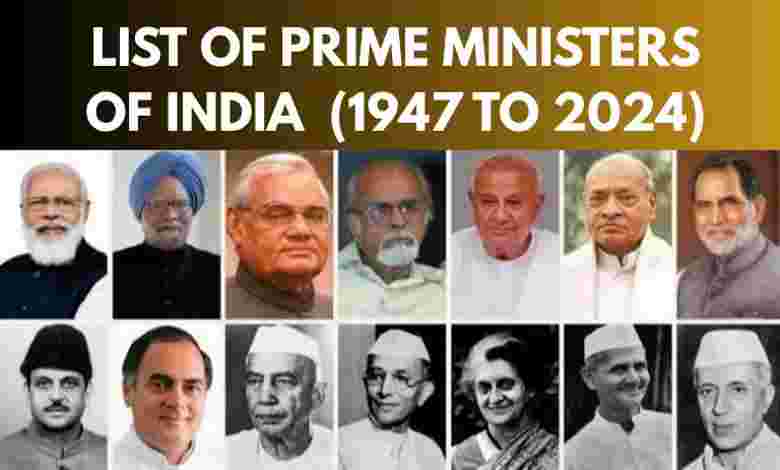
List of Prime Ministers of India: The Prime Minister of India is the head of the government and plays a crucial role in shaping the nation’s policies, governance, and international relations. They lead the Council of Ministers, make key decisions, and ensure the smooth functioning of the administration. Narendra Modi is the current Prime Minister of India, serving since 2014. He took the oath for his third term on June 9, 2024, making him the second longest-serving Prime Minister after Jawaharlal Nehru. This article provides a List of Prime Ministers of India from 1947-[year] highlighting their contributions and leadership.
Prime Ministers of India
India has seen 15 Prime Ministers since independence, each shaping the nation’s progress. Narendra Modi, currently serving his third term in 2024, began his leadership in 2014 and has introduced transformative reforms like GST, Make in India, and Swachh Bharat Abhiyan. His tenure also witnessed major decisions, including the revocation of Article 370, digital advancements, and a push for self-reliance (Atmanirbhar Bharat).
List of Prime Ministers of India from 1947-[year]
Jawaharlal Nehru, India’s first Prime Minister, took office on 15th August 1947. Currently, Narendra Modi serves as India’s 15th Prime Minister. Below is a detailed List of Prime Ministers of India from 1947-[year] along with their tenure and key contributions.
List of all the Prime Ministers of India from 1947-2026
India has been governed by 14 prime ministers over the years. Currently, Narendra Modi is serving his third term as Prime Minister in 2024, continuing his leadership journey that started in 2014.
Known for major reforms like GST, Make in India, and Swachh Bharat, Modi’s tenure also included bold actions like Article 370’s revocation and digital advancements.
Here is the List of Prime Ministers of India from 1947-[year]:
| No. | Name | Start of Term | End of Term | Duration in years and days | Party |
| 1 | Jawaharlal Nehru (1889–1964) | 15 August 1947 | 27 May 1964 | 16 years, 286 days | Indian National Congress |
| 2 | Gulzarilal Nanda (1898–1998) | 27 May 1964 | 9 June 1964 | 13 days | – |
| 3 | Lal Bahadur Shastri (1904–1966) | 9 June 1964 | 11 January 1966 | 1 year, 216 days | – |
| 4 | Indira Gandhi (1917–1984) | 24 January 1966 | 24 March 1977 | 11 years, 59 days | Indian National Congress (R) |
| 5 | Morarji Desai (1896–1995) | 24 March 1977 | 28 July 1979 | 2 years, 126 days | Janata Party |
| 6 | Charan Singh (1902–1987) | 28 July 1979 | 14 January 1980 | 170 days | Janata Party (Secular) |
| 7 | Indira Gandhi (1917–1984) | 14 January 1980 | 31 October 1984 | 4 years, 291 days | Indian National Congress (I) |
| 8 | Rajiv Gandhi (1944–1991) | 31 October 1984 | 2 December 1989 | 5 years, 32 days | Indian National Congress |
| 9 | Vishwanath Pratap Singh (1931–2008) | 2 December 1989 | 10 November 1990 | 343 days | Janata Dal |
| 10 | Chandra Shekhar (1927–2007) | 10 November 1990 | 21 June 1991 | 223 days | Samajwadi Janata Party (Rashtriya) |
| 11 | P. V. Narasimha Rao (1921–2004) | 21 June 1991 | 16 May 1996 | 4 years, 330 days | Indian National Congress (I) |
| 12 | Atal Bihari Vajpayee (1924–2018) | 16 May 1996 | 1 June 1996 | 16 days | Bharatiya Janata Party |
| 13 | H. D. Deve Gowda (born 1933) | 1 June 1996 | 21 April 1997 | 324 days | Janata Dal |
| 14 | Inder Kumar Gujral (1919–2012) | 21 April 1997 | 19 March 1998 | 332 days | – |
| 15 | Atal Bihari Vajpayee (1924–2018) | 19 March 1998 | 22 May 2004 | 6 years, 64 days | Bharatiya Janata Party (NDA) |
| 16 | Manmohan Singh (1932-2024) | 22 May 2004 | 26 May 2014 | 10 years, 4 days | Indian National Congress (UPA) |
| 17 | Narendra Modi (born 1950) | 26 May 2014 | May 30, 2019 | 11 years, 266 days | Bharatiya Janata Party (NDA) |
| May 30, 2019 | June 9, 2024 | ||||
| June 9, 2024 | Incumbent |
Source: pmsangrahalaya.gov.in
Also Read: List of Presidents of India
Prime Ministers of India from 1947-[year]
From Jawaharlal Nehru’s vision for a modern India to Narendra Modi’s digital and economic transformation, each leader has played a significant role in nation-building. Check out the contribution of each leader in shaping the independent India:
Narendra Modi (2014 – Present)
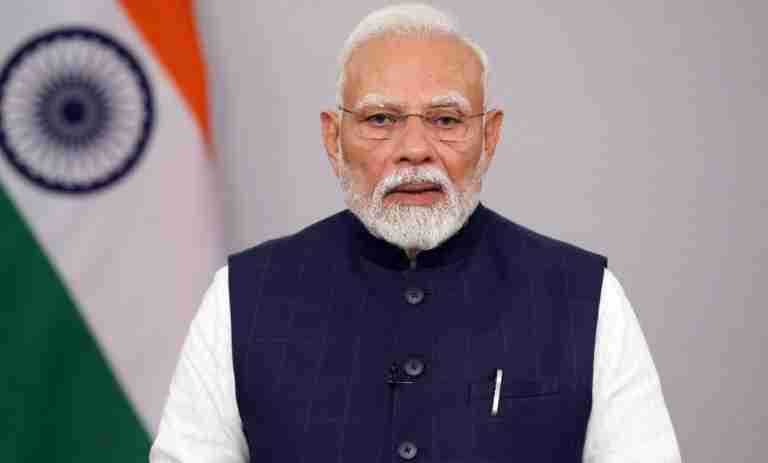
Narendra Modi became India’s 14th Prime Minister in 2014 and has served three consecutive terms. His tenure has been marked by bold economic and policy reforms such as GST (Goods and Services Tax), Digital India, Make in India, and Swachh Bharat Abhiyan. He also played a crucial role in revoking Article 370 in Jammu & Kashmir, the implementation of the CAA.
Dr. Manmohan Singh (2004-2014)
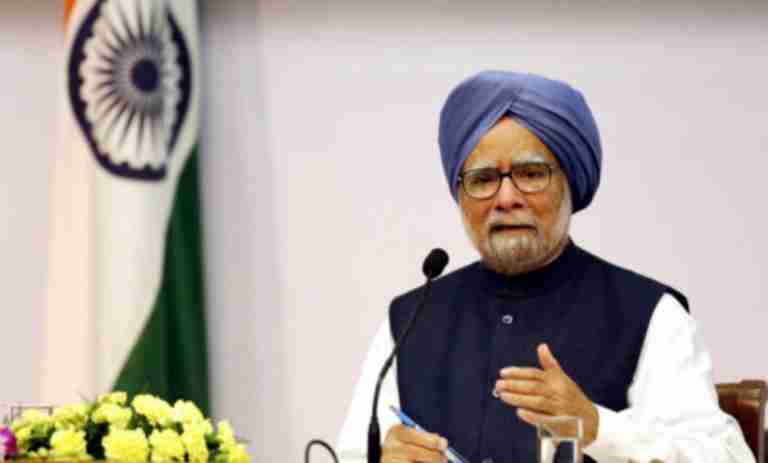
Dr. Manmohan Singh served as India’s 13th Prime Minister and was a respected economist. He is known for introducing economic liberalization in 1991 as Finance Minister. As Prime Minister, he launched schemes like MNREGA, Right to Information (RTI), and the Indo-US Nuclear Deal. His tenure saw significant economic growth, but it was also affected by corruption scandals such as 2G, Commonwealth Games, and Coalgate.
Atal Bihari Vajpayee (1996, 1998-99, 1999-2004)
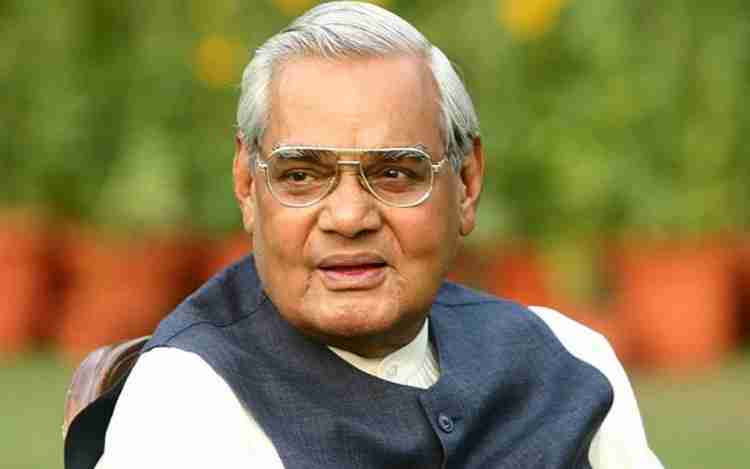
Atal Bihari Vajpayee was the 10th Prime Minister of India and served three terms. He is remembered for Pokhran-II nuclear tests (1998), the Kargil War (1999), and the Golden Quadrilateral highway project. His tenure strengthened India’s defense and infrastructure. In 2014, he was honored with the Bharat Ratna, India’s highest civilian award.
Inder Kumar Gujral (1997-1998)
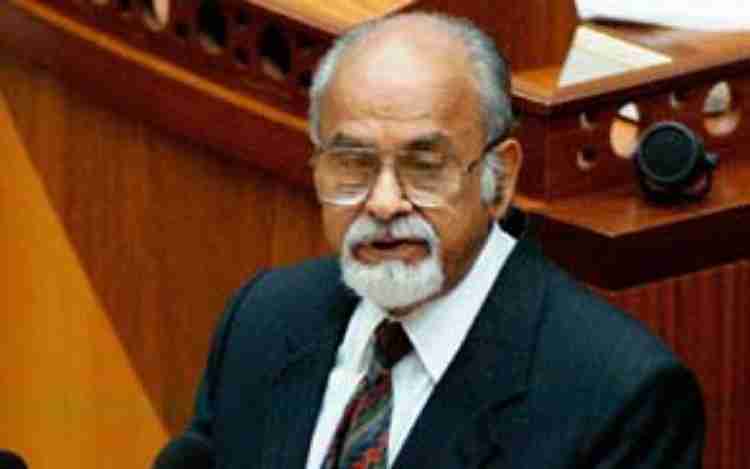
Inder Kumar Gujral, the 12th Prime Minister of India, is best known for his Gujral Doctrine, which promoted good relations with India’s neighbors. His tenure was short-lived, but his diplomatic initiatives aimed at improving relations with Pakistan, Nepal, and Bangladesh had a long-term impact.
H.D. Deve Gowda (1996-1997)
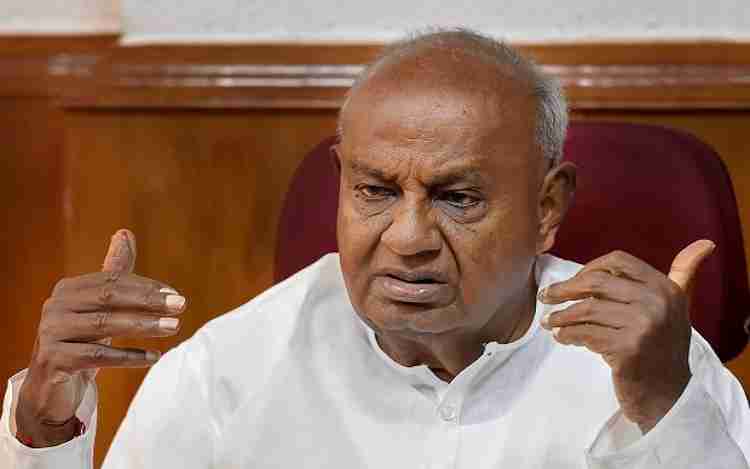
H.D. Deve Gowda served as India’s 11th Prime Minister and was a leader from Karnataka. He focused on agriculture and irrigation projects, benefiting farmers across the country. His tenure was part of a coalition government formed by the United Front.
P.V. Narasimha Rao (1991-1996)
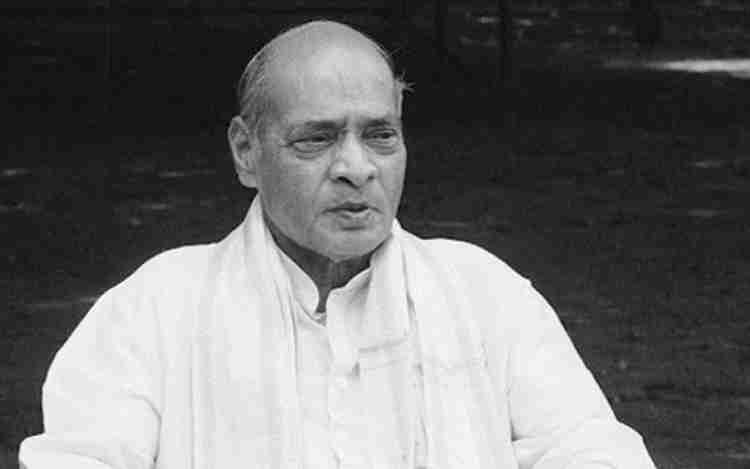
P.V. Narasimha Rao was the 10th Prime Minister of India and is regarded as the architect of India’s economic liberalization. His government introduced Liberalization, Privatization, and Globalization (LPG) reforms, which transformed India into a free-market economy. His leadership helped India recover from an economic crisis and improved foreign relations.
Chandra Shekhar (1990-1991)
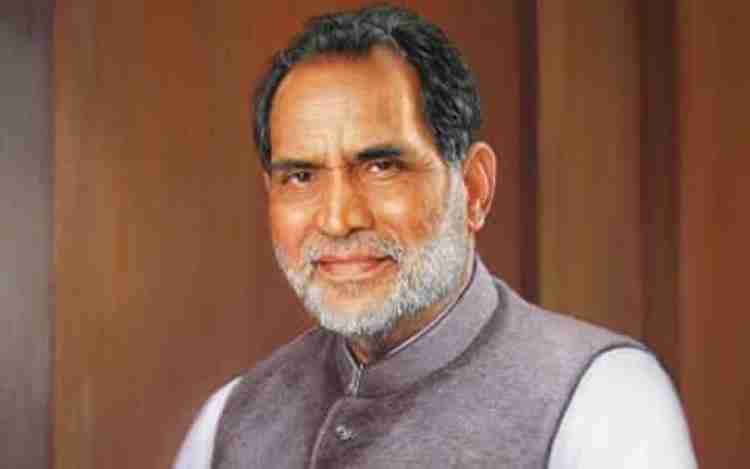
Chandra Shekhar served as the 8th Prime Minister of India for a brief period. His government struggled with a weak coalition, leading to political instability. His tenure was marked by the 1991 economic crisis and the assassination of Rajiv Gandhi.
V.P. Singh (1989-1990)
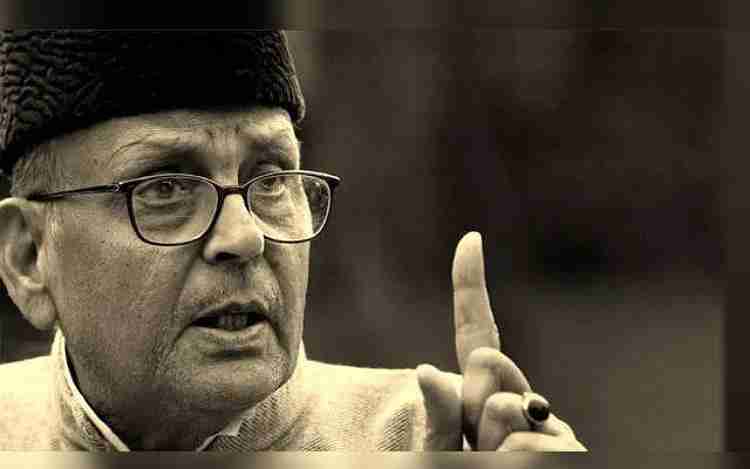
V.P. Singh was the 7th Prime Minister of India and is most remembered for implementing the Mandal Commission Report, which introduced reservations for OBCs in government jobs and educational institutions. His tenure also saw political turbulence due to caste-based reservations and protests.
Rajiv Gandhi (1984-1989)
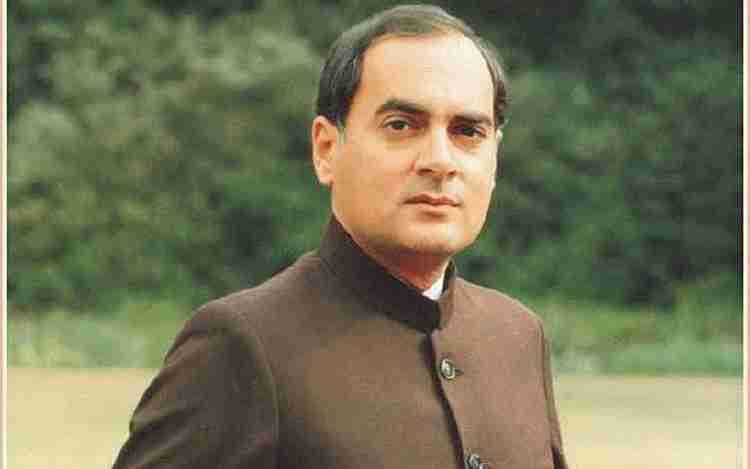
Rajiv Gandhi, the 6th Prime Minister of India, was the youngest to hold office at 40 years old. His tenure focused on modernizing India’s technology and telecom sector. He introduced computerization, reduced the voting age to 18, and initiated the Panchayati Raj system. However, his term was marred by the Bofors scandal, Shah Bano case, and Bhopal Gas Tragedy. He was assassinated by an LTTE suicide bomber in 1991.
Chaudhary Charan Singh (1979-1980)
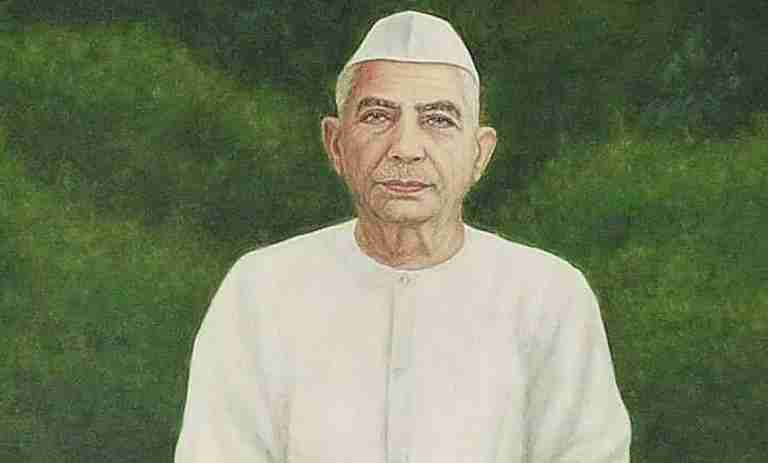
Chaudhary Charan Singh served as the 5th Prime Minister of India. Coming from a farmer’s background, he championed agricultural and land reforms. His tenure was short-lived due to lack of parliamentary support.
Morarji Desai (1977-1979)
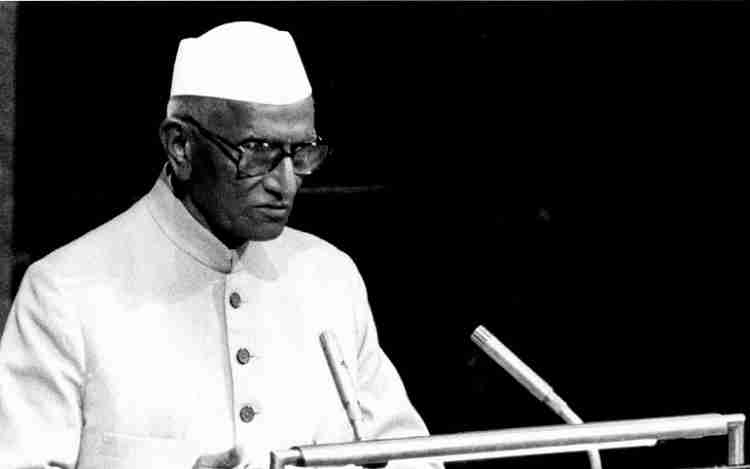
Morarji Desai, the 4th Prime Minister of India, was the first non-Congress Prime Minister. He led the Janata Party government after Indira Gandhi’s Emergency. He worked on dismantling the Emergency laws and improving India’s foreign relations, including with Pakistan and China.
Indira Gandhi (1966-1977, 1980-1984)
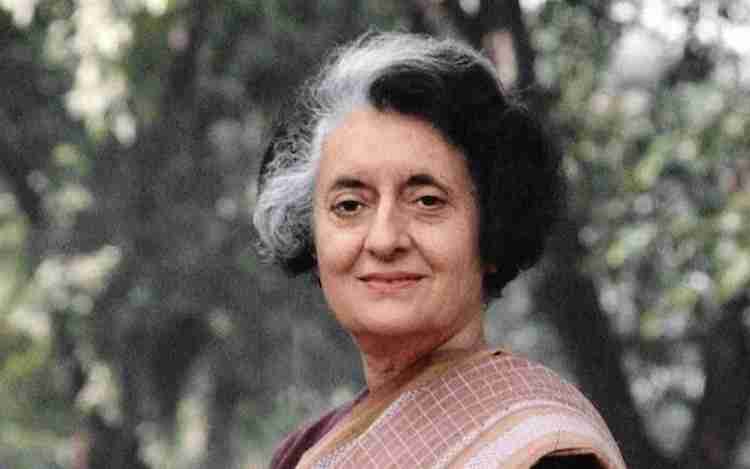
Indira Gandhi was India’s 3rd and first woman Prime Minister. She is best known for leading India during the 1971 Bangladesh Liberation War and implementing the Green Revolution to achieve self-sufficiency in food production. However, her decision to impose Emergency (1975-1977) remains controversial. She was assassinated in 1984 following Operation Blue Star.
Gulzarilal Nanda (1964, 1966 – Interim PM)
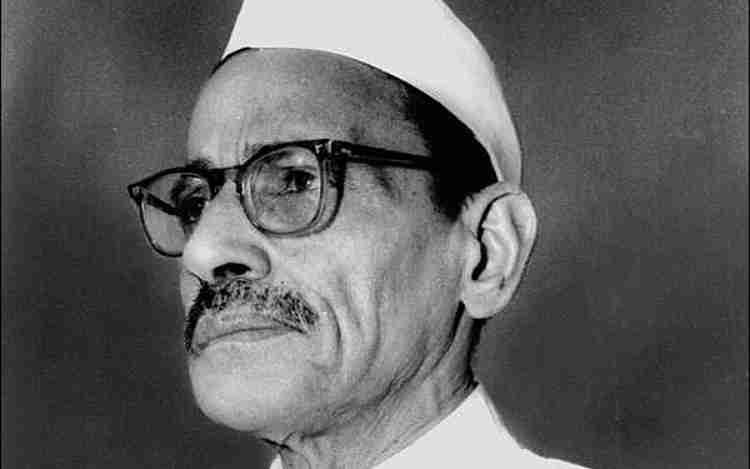
Gulzarilal Nanda served as interim Prime Minister twice (1964, 1966) after the deaths of Jawaharlal Nehru and Lal Bahadur Shastri. His tenure lasted only 13 days each time, but he played a role in ensuring political stability.
Lal Bahadur Shastri (1964-1966)
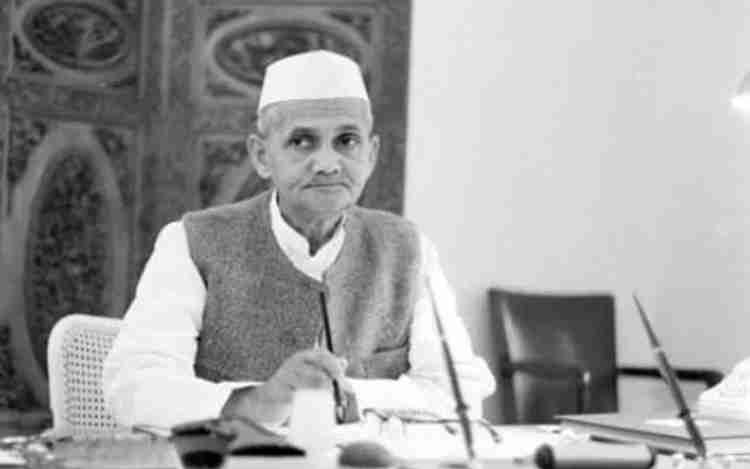
Lal Bahadur Shastri was the 2nd Prime Minister of India. He is famous for the slogan “Jai Jawan, Jai Kisan”, which honored soldiers and farmers. He led India during the 1965 Indo-Pakistan War. His tenure ended abruptly due to his mysterious death in Tashkent after signing a peace agreement.
Jawaharlal Nehru (1947-1964)
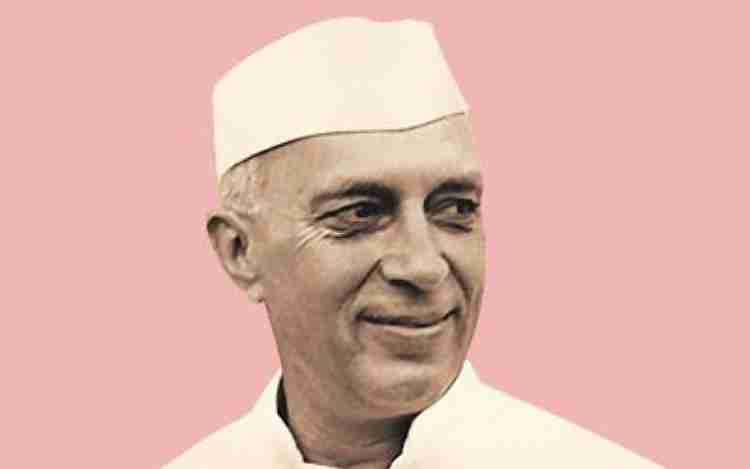
Jawaharlal Nehru was India’s first and longest-serving Prime Minister. A key figure in the Indian independence movement, he played a major role in shaping modern India. His contributions include establishing IITs, AIIMS, the Planning Commission, and a non-aligned foreign policy. He was popularly called “Chacha Nehru” for his love for children.
Also Read: List Of All Chief Justices Of India
List of all the Prime Ministers of India: Important Points
- Article 75 of the Indian Constitution envisages that there will be a Prime Minister who shall be appointed by the President of India.
- Prime Minister is the leader of the Cabinet Ministers. The main executive powers of the government are vested in the Prime Minister while the President is the nominal head of the State.
- Article 78 of the Indian Constitution specifies the duties of the Prime Minister of India. He acts as a link between the President and Cabinet while discharging his duties.
- The Prime Minister of India determines the dates of its meetings and programmes for the Parliament session. He also decides when the House has to be prorogued or dissolved.
- As a chief spokesman, he makes the announcement of principal government policies and answers questions.
- Prime Minister (PM) recommends President regarding the appointment of many officers, he allocates and reshuffles various portfolios among Ministers, he presides over the meeting of the Council of Ministers and influences their decisions.
- The Prime Minister can ask any member to resign or recommend the President to remove any Minister.
List of Prime Ministers of India: Important Facts
- Jawaharlal Nehru is recognised as the architect of modern India. He was the first Prime Minister of India and holds the record for the longest tenure, with 16 years and 286 days in office.
- Indira Gandhi was the first and only woman to hold the position, serving for a total of 15 years and 350 days across two terms.
- Rajiv Gandhi became the youngest Prime Minister at age 40, taking office on October 31, 1984.
- Morarji Desai was the first Prime Minister not from the Indian National Congress, serving from March 24, 1977, to July 28, 1979.
- Atal Bihari Vajpayee had the shortest tenure of any Prime Minister, with just 16 days in office during his first term in 1996.
- Manmohan Singh served as India’s first Sikh Prime Minister from May 22, 2004, to May 26, 2014.
- P. V. Narasimha Rao was the first Prime Minister from South India, serving from June 21, 1991, to May 16, 1996.
- Gulzarilal Nanda served as acting Prime Minister twice, each time for just 13 days.
- Narendra Modi has been in office since May 26, 2014, and is currently serving his third term after being re-elected in June 2024.
What is the Retirement Age of Prime Minister in India?
In India, there is no constitutionally mandated retirement age for the Prime Minister. The Indian Constitution does not specify a maximum age limit for holding the office of Prime Minister. Instead, the tenure and eligibility criteria are governed by constitutional provisions and parliamentary procedures.
Constitutional Provisions
- Tenure: The Prime Minister serves at the pleasure of the President, provided they maintain the confidence of the Lok Sabha, the lower house of Parliament. There is no fixed term limit or age cap; a Prime Minister can continue in office as long as they have the support of the majority in the Lok Sabha.
- Eligibility: To be appointed as Prime Minister, an individual must be:
- A citizen of India.
- A member of either the Lok Sabha or the Rajya Sabha. If not a member at the time of appointment, they must secure membership in either house within six months.
- At least 25 years old if a member of the Lok Sabha or at least 30 years old if a member of the Rajya Sabha.
Historical Context
Throughout India’s history, several Prime Ministers have served well beyond the age of 70, including:
- Morarji Desai: Became Prime Minister at the age of 81.
- Atal Bihari Vajpayee: Served as Prime Minister until the age of 79.
- Narendra Modi: Re-elected for a third term in 2024 at the age of 75.
What is the Salary of the Prime Minister of India?
As of 2026, the official monthly salary of the Prime Minister of India is approximately ₹1.66 lakh INR.
Note: While this is the gross amount, including various allowances, the PM also receives significant non-monetary perks, such as high-level security, an official residence, and travel.
Salary Breakdown
The breakdown of the salary based on current official figures is as follows:
| Frequency | Amount (Approximate) |
| Daily | ₹5,533 |
| Weekly | ₹38,733 |
| Monthly | ₹1,66,000 |
| Annually | ₹19,92,000 |
Components of the Monthly Salary
The total monthly pay is a combination of several specific allowances defined by the Salaries and Allowances of Ministers Act:
- Basic Pay: ₹50,000
- Constituency Allowance: ₹45,000 (for responsibilities as an MP)
- Daily Allowance: ₹2,000 per day (for days the PM attends Parliament)
- Sumptuary Allowance: ₹3,000 (for hospitality and official hosting)
- Other Allowances: Roughly ₹66,000
Key Perks and Benefits
Beyond the cash salary, the Prime Minister is entitled to several elite benefits:
- Residence: Rent-free stay at 7, Lok Kalyan Marg, New Delhi.
- Travel: Use of the specially equipped Air India One (Boeing 777) for international travel and armoured luxury vehicles for ground transport.
- Security: Round-the-clock Z+ security provided by the Special Protection Group (SPG).
- Medical: Full medical coverage for themselves and their family.
Note: For comparison, the President of India receives a higher salary of ₹5 lakh per month, and the Vice President receives ₹4 lakh per month.
FAQs
1. Who is the youngest PM of India?
Rajiv Gandhi was the youngest PM of India.
2. Who is the 8th PM of India?
The 8th Prime Minister of India was Chandra Shekhar, who served from November 10, 1990, to June 21, 1991.
3. Who served for the shortest tenure as the Prime Minister of India?
Atal Bihari Vajpayee served for the shortest tenure as the Prime Minister of India.
4. Who is the current Prime Minister of India?
Narendra Modi is the current Prime Minister of India.
5. Who is the longest-serving Prime Minister of India?
Pt. Jawaharlal Nehru is the longest-serving Prime Minister of India. He served from 15 August 1947 to 27 May 1964.
6. Who was the first female Prime Minister of India?
Indira Gandhi was the first and only female Prime Minister of India.
7. Who was the first Prime Minister of India?
Pt. Jawaharlal Nehru was the first Prime Minister of India.